
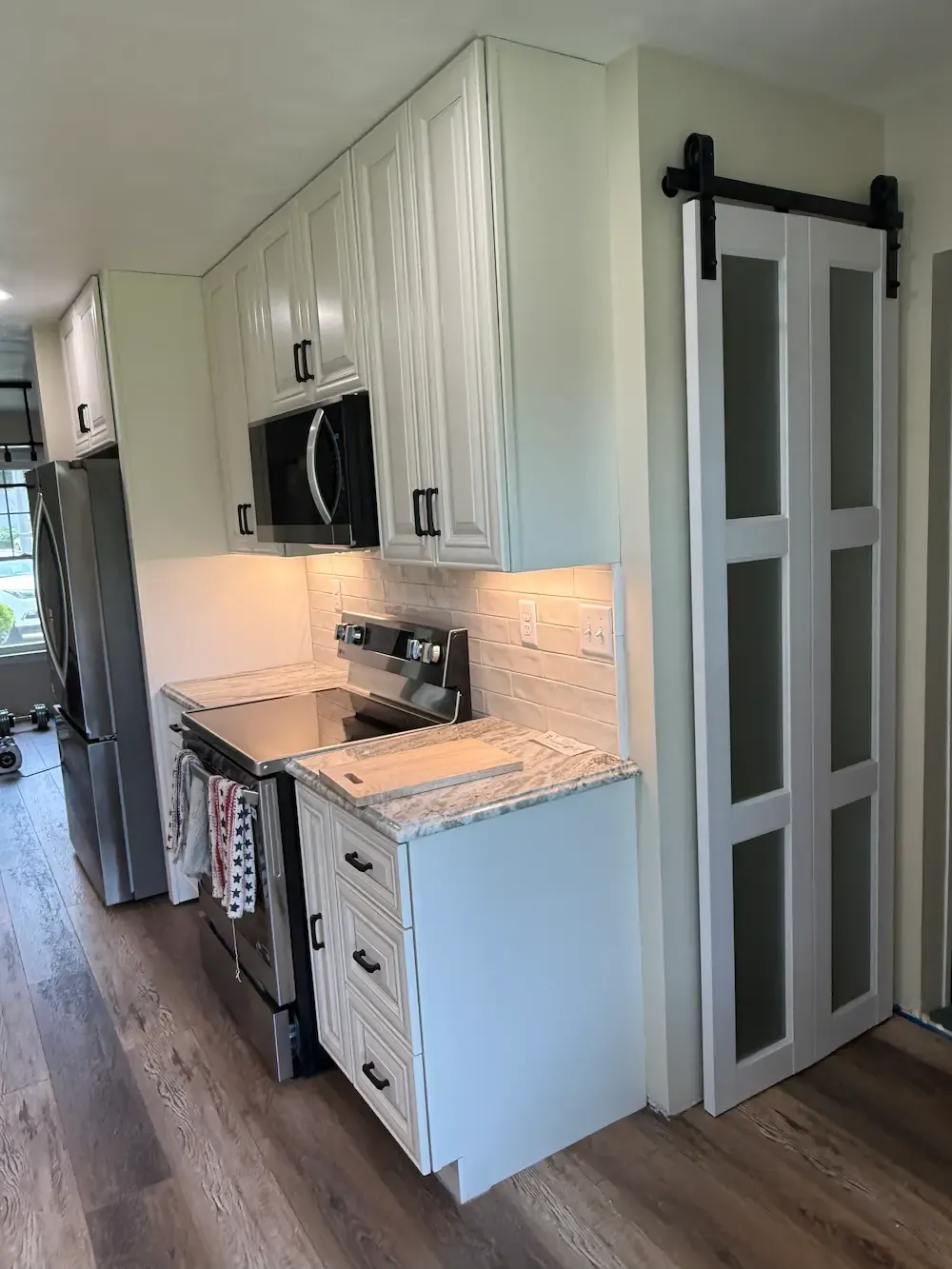
Chesapeake covers a lot of ground, from the Western Branch section to the edge of the Great Dismal Swamp, and many of its homes are newer than those in Norfolk or Virginia Beach. That changes the work. Instead of fixing an old house, Chesapeake projects are often about making a solid house fit a growing family: a bigger kitchen, a better bathroom or an addition.
Around Chesapeake
Chesapeake was formed in 1963, when the city of South Norfolk joined with what was left of Norfolk County, a county dating back to 1691. It is the second-largest city in Virginia by land area, and the northeastern part of the Great Dismal Swamp lies inside its limits.
I-64, part of the Hampton Roads Beltway, crosses the city, I-464 connects it with downtown Norfolk, and State Route 168 includes the Chesapeake Expressway toll road. Interstate 664 starts its loop toward Newport News in the Western Branch section. Greenbrier Mall is on Greenbrier Parkway, Chesapeake City Park on City Park Drive, Chesapeake Regional Medical Center on Battlefield Boulevard North and Oak Grove Park on Byron Street.
What Chesapeake Homes Need
About three in four Chesapeake homes are lived in by their owners, compared with about 63% across the metro (U.S. Census Bureau, 2024 ACS), and more than a third of households have children under 18 (2024 ACS). The typical home was built around 1989, and nearly three in ten were built in 2000 or later.
Owners who plan to stay, with kids at home, are the ones who outgrow a house without wanting to leave it. That's where kitchen remodels, bathroom updates and room additions come in. A kitchen or bathroom from around 1990 is now about 35 years old, and that's about when cabinets, counters and showers start to wear out.
Additions and wall removals need design, engineering and permits. We work with architects and engineers when a project calls for them and handle the permits.